This post may contain affiliate links.
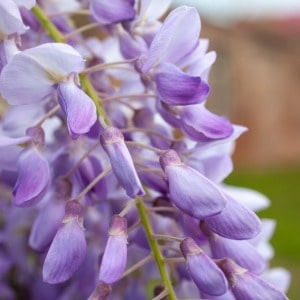
Wisteria is a woody, deciduous climber that is very invasive. Wisteria is known for its vigorous growth as well as its fragrant eye-catching flowers.
Depending on the variety, wisteria flowers come in a large range of colors, including red, lavender, white and blue.
Although some gardeners avoid wisteria due to its invasive nature, if you follow the guide below you will find that it can be one of the most beautiful plants in your garden.
Want to try making your own jelly at home?
Get my free guide with 8 easy, beginner-friendly jelly recipes you can confidently make.
Site Selection
Wisteria can have runners up to 10 feet in length per year; because of this selecting the right location is very important. It will perform the best when planted in full sun with moist well drained soil. Before planting, you must also determine how you are going to train your Wisteria.
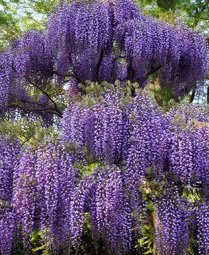

When and How to Plant Wisteria
Planting wisteria in the spring of fall will produce the best results. To begin dig a hole just as deep as the root ball and twice as wide. For poor soil, mix a small amount of compost in to the removed soil.
Place the plant in the hole and back fill with the soil and compost mix. Firm the soil gentle to remove any air pockets and watering thoroughly to establish. To finish, support with a sturdy post or trellis.
Caring for Wisteria
In the spring, a light application of fertilizer will improve growth. Discontinue fertilization after plant is established. Due to its invasive nature pruning is necessary.
Once it has reached its desired height, prune the top shoots to encourage side growth. Then train the side shoots onto your trellis or post. Once it has reached full size prune unwanted growth of to reshape.
Alan Summers, president of Carroll Gardens, Inc., has over 30 years experience in gardening and landscape design. He has made Carroll Gardens one of America’s preeminent nurseries, having introduced more than 20 new perennials and woody shrubs over the years and reintroduced numerous “lost” cultivars back to American gardeners.
Article written by Alan Summers. Every Saturday, Alan hosts a call-in gardening forum on WCBM radio – 680 AM. For those outside of the WCBM listening area, they can listen to radio show via the internet.
Reprinted with permission.
Follow my gardening board on Pinterest.