This post may contain affiliate links.
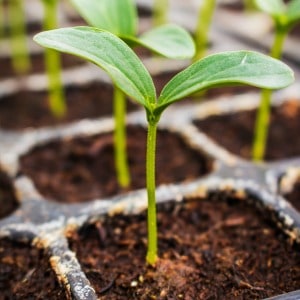
It’s a beautiful, chilly March day, and I’m dreaming about planting my garden this spring. While it’s definitely still too cold to plant my garden, with a little planning and preparation, I can start my vegetable garden indoors to be ready to plant outdoors as soon as the last frost passes.
When to Start Seeds Indoors
Generally you can start vegetables from seed four to ten weeks before the last frost. Where I live the last frost occurs in the middle of May.
Related Article: What to Plant in May: A Guide to Spring Gardening
Want to try making your own jelly at home?
Get my free guide with 8 easy, beginner-friendly jelly recipes you can confidently make.
Some vegetables transplant easier than others. Lettuce, beets, broccoli, cabbage, cauliflower, eggplant, onions, peppers, and tomatoes generally transplant well. Carrots, peas, corn, cucumbers, pumpkins, beans, and squash are harder to transplant, so it is not recommended to start these plants from seed.
Vegetables can be successfully started from seed if you keep them the correct temperature and provide them with the appropriate amounts of light and moisture.
How to Make Your Own Seed Starting Mix
You can make your own seed starting mix by combining equal parts of peat moss, perlite, and vermiculite, which are all available at any garden supply store.
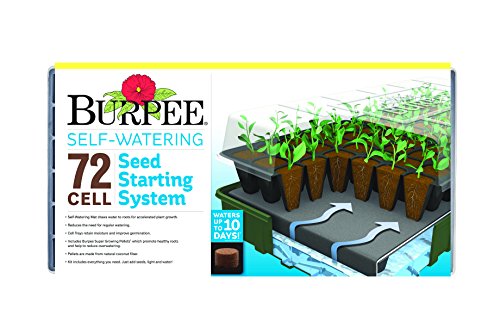
You can use just about any container that will hold soil to plant your seeds, as long as you have drainage holes. Or you can buy seed starting trays like this Burpee self-watering seed starting kit that makes planting really easy. Just make sure your container is clean.
Burpee 72 Cell Self Watering Seed Starting Kit
Plant the seeds as recommended on the seed packets. Cover the tray with a plastic cover or plastic wrap to help keep moisture in. Remove the cover or plastic wrap when seedlings appear. Keep soil moist with a misting spray bottle. Make sure the soil doesn’t gets too wet.
Keep your seedlings between 65-75 degrees. You can set them in a sunny windowsill, but it is best to use fluorescent lights up to 16 hours a day two to four inches above the seedlings.
Related Article: What to Plant in April: A Guide to Spring Gardening
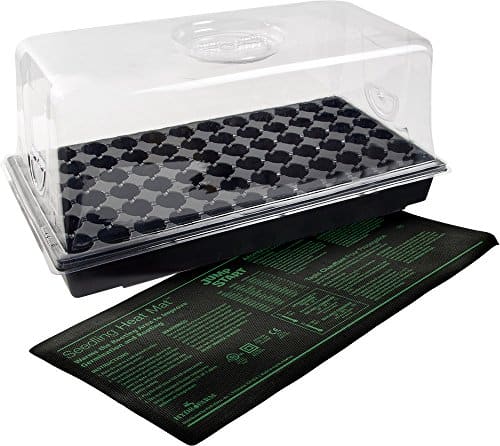
To better regulate the temperature of your plants you can get a seed starting kit like this one that comes with a heat mat and humidity dome.
After your seedlings start growing leaves, weed out the weakest looking plants, and start fertilizing once or twice a week.
Hydrofarm 7.5 Inch Dome Jump Start CK64060 Hot House with Heat Mat, Tray, 72 Cell Insert, 7.5
When to Transplant Your Seedlings
When you see several sets of leaves, you can transplant the seedlings to individual pots filled with potting soil. If you transplant to a peat pot you can place this pot directly in the garden when it’s time to plant.
After the chance of frost has passed, gradually toughen the plants for about two weeks before you plant them so that they can adjust to their new environment. Set them outside for a couple of hours a day to get used to their new conditions, gradually increasing the amount of time spent outside each day.
If you are not sure of the date of your last frost, or would like more information about growing vegetables in your area, you can contact your local agricultural extension office either by telephone or via their web site. They offer free, helpful gardening information for amateur gardeners.
Follow my gardening for beginners board on Pinterest.
Related Articles
- Growing Bean Sprouts in a Jar
- When to Plant Broccoli
- A Windowsill Herb Garden for Kids
- 6 DIY All Natural Garden Fertilizers
- Using Epsom Salt as a Natural Fertilizer in the Garden
- Create a Pond in a Container in Less than an Hour
- 6 Best Vegetables to Start Indoors